Single in the Glen? Here Is How to Make Dating Work Anyway

Practical, plain-spoken advice for rural singles across Highland Scotland - because distance is real, and pretending otherwise helps nobody.

You already know the maths. You live forty minutes from the nearest shop, the broadband drops out when it rains, and the last time a dating app showed you someone genuinely close, they turned out to be in Inverness - which is not exactly round the corner when you are calling a glen in Wester Ross home. Remote dating in Scotland is not a niche problem. For a large share of people living between Beauly and Bettyhill, it is simply the reality of being single here.

The global apps were not built with you in mind. Their fifty-mile radius sounds generous until you realise that circle contains three mountain ranges, a sea loch and about four hundred people. This guide is not going to tell you to lower your expectations or drive further. It is going to give you practical, specific advice on how to date well when the nearest coffee shop requires a plan, a full tank and a weather check.

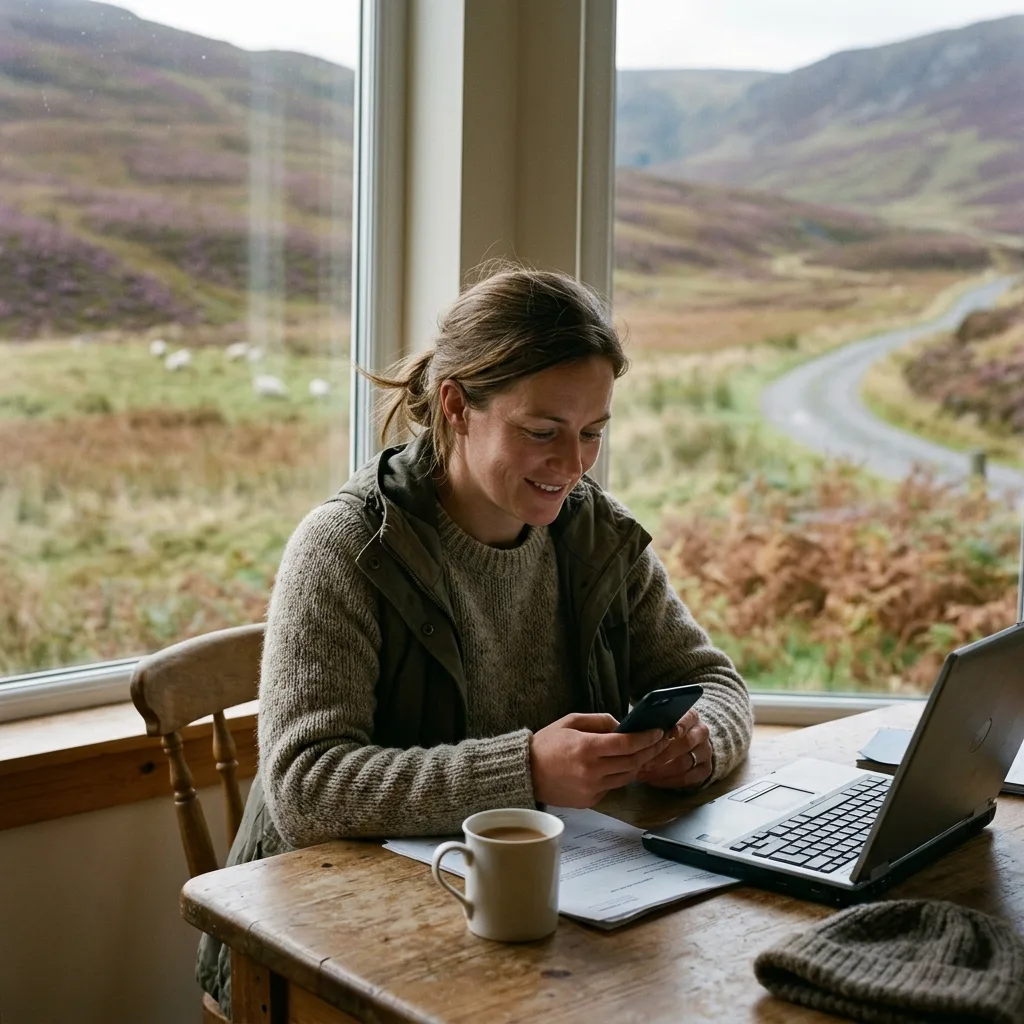
View from a Highland cottage across an empty glen towards distant hills on a clear winter morning

Is anyone actually on dating sites in remote Highland areas?

Yes, though the numbers are smaller and spread very differently from urban sites - which is precisely why a site built around realistic Highland geography matters more than one optimised for cities.

This is the question almost every rural single asks first, and it deserves a straight answer rather than marketing bluster. The population of the entire Highland council area is around 235,000 people spread across an area bigger than Belgium. Inverness and the Moray Firth corridor hold a substantial share of that. The further north and west you go - Caithness, Sutherland, Torridon, the Small Isles - the thinner the numbers get. Sparse, but not zero.

The honest reality is that rural singles Highland-wide are on multiple platforms, and many have given up on one or two already. You are probably not the only person in your glen who has downloaded an app, seen nobody within thirty miles, and quietly deleted it a fortnight later. What that means in practice is that a smaller, locally-focused network has a better chance of actually surfacing the people who are there - because they are not buried beneath profiles from Aberdeen or Glasgow inflating the apparent choice.

  • Distance filters lie. A fifty-mile radius on a flat urban grid is a short drive. A fifty-mile radius from Kinlochewe crosses three mountain passes and takes over an hour in good weather. Always think in drive time, not miles.
  • Seasonality changes the pool. Winter sees more permanent residents online; summer brings seasonal workers in hospitality and tourism who may not stay. Neither group is better or worse - just different in what they are looking for.
  • Inverness acts as a hub. Many rural singles across a wide catchment - Dingwall, Beauly, Drumnadrochit, even Ullapool - already make regular trips to Inverness for work, appointments or shopping. That makes it a natural first-date location for people who are not in the same glen.
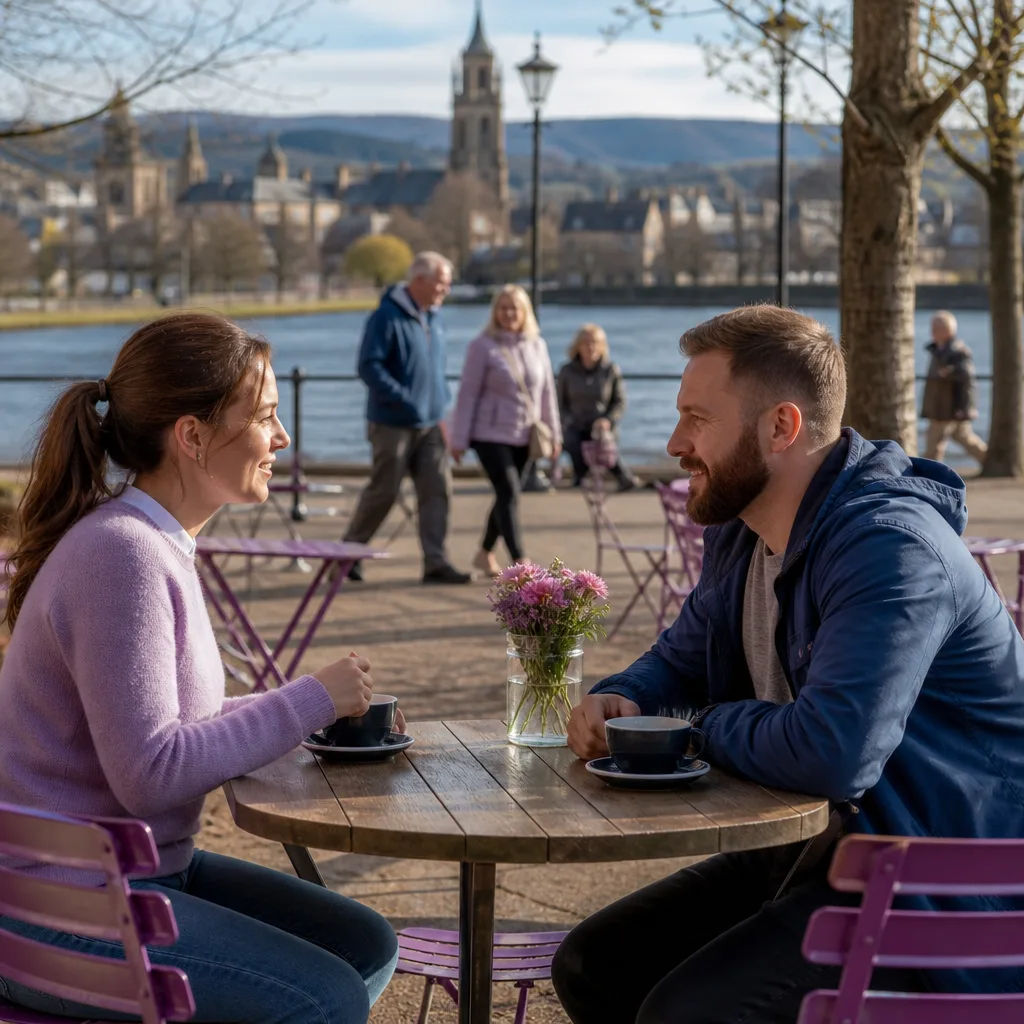
Inverness city centre by the River Ness on a quiet weekday morning, cafes opening along the bank

How do you actually plan dates when everything involves a long drive?

The answer is to stop treating the drive as an inconvenience and start treating it as something to plan around - which means batching, communicating honestly, and choosing first-date venues that justify the journey for both people.

Think of it less like planning a date and more like logistics. That sounds unromantic. It is not. A person who has driven ninety minutes to meet you has already made a significant gesture, and you probably have too. Acknowledging that openly - early, and without drama - sets a much better tone than pretending geography is irrelevant.

The first practical rule: batch your Inverness trips. If you have a hospital appointment, a Costco run and a work meeting in town on a Thursday, that is the day to suggest a coffee. You are going anyway. They might be too. A first meeting that costs both of you an extra twenty minutes rather than an extra two hours has a very different emotional weight, and you are much more likely to follow through rather than cancel when the weather turns.

If you are regularly in Inverness, the café at Leakey's Bookshop on Church Street is a genuinely good first-meeting spot - unhurried, interesting without being loud, and easy to extend into a longer browse if things are going well. It is the kind of place that does not feel like you made a special effort, which takes the pressure off both of you.

For those further out - say, a single person dating long distance in Scotland between two remote points rather than routing through a hub - it is worth agreeing early on who travels and when. A reasonable starting pattern is to alternate, and to say so plainly in your first few messages. Nobody needs to martyr themselves driving every time, and most people respond well to someone who is upfront about it.

What about patchy signal and slow broadband - how do you use dating apps offline?

Rural singles in Highland Scotland often lose signal entirely on the road home, so the practical answer is to do the messaging work while you have a connection, not to rely on being always-on.

This is a real, unglamorous problem that nobody in the dating industry talks about. You leave Inverness at half five. By the time you hit the A835 north of Garve, your signal is gone. Any messages you meant to send are sitting unsent in an app that assumes 4G is a given.

A few things that genuinely help:

  • Draft messages before you lose signal. Most messaging apps let you compose offline; the message sends when you reconnect. Get into the habit of writing your reply while you are still in town rather than waiting until you are home.
  • Set expectations early. Telling someone you are offline between certain hours is not an excuse - it is useful information. Most people who live rurally understand immediately. Those who do not are probably not a good match for this life anyway.
  • Move to phone calls sooner than you might in a city. Calls work on weaker signal than data. A short phone call mid-week costs nothing and tells you more about someone in ten minutes than a week of app messages.
  • Sync profiles and photos while on Wi-Fi. If you are on a platform that caches profiles locally, do your browsing in town and save your thinking for the drive home.

Dating apps offline is less about the technology and more about adjusting the rhythm. Urban daters refresh constantly and expect instant replies. That is not your world, and it is fine to say so.

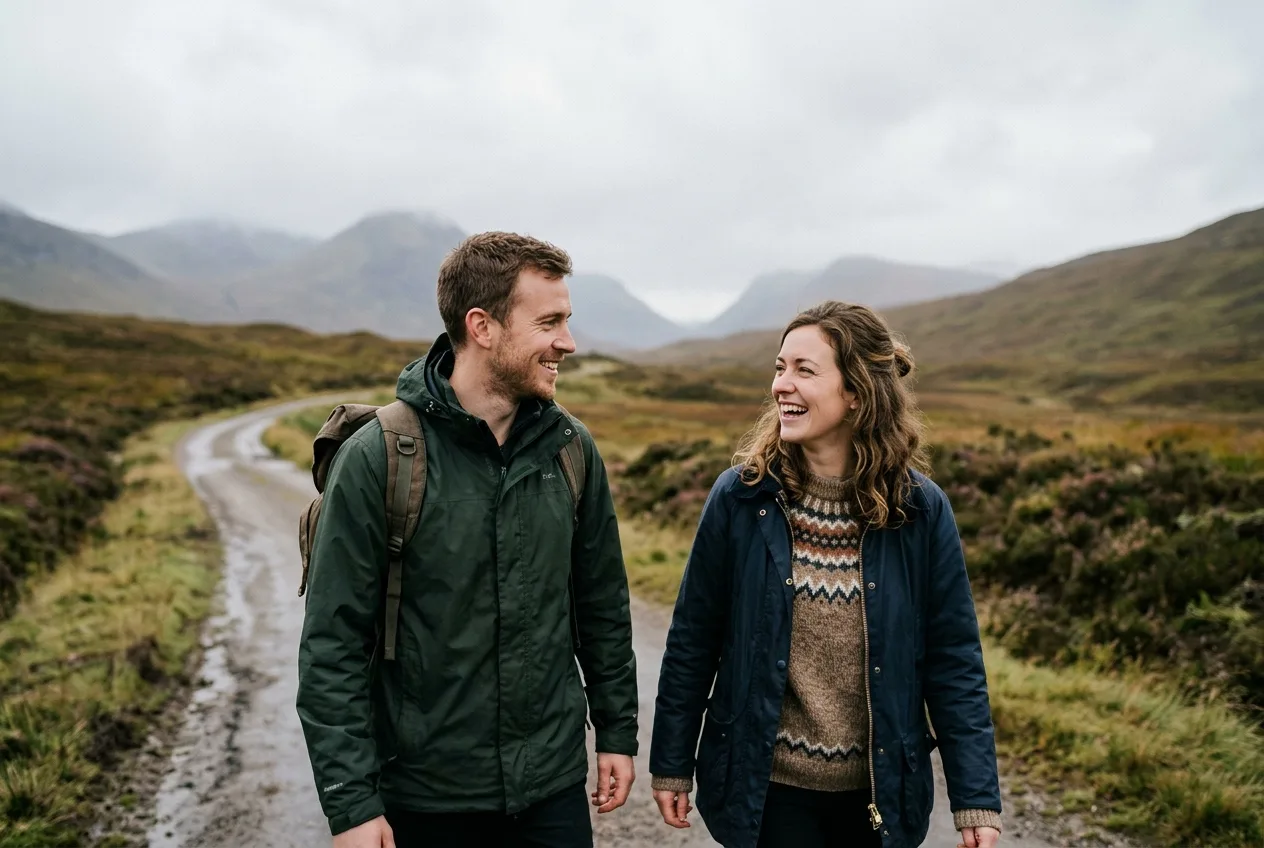
Two people walking along a loch shore path on a grey autumn afternoon, wrapped up against the weather

How do you work around seasonal jobs and Highland winters?

Seasonal work patterns and short winter days genuinely narrow the windows when dating is possible, so the people who manage it well treat those constraints as facts to plan around rather than problems to apologise for.

Highland employment is not nine-to-five. A lot of it is seasonal: ski patrol, estate work, summer hospitality, harvest contracting, lambing. If you work in tourism between April and October, your life looks completely different in November. The person who is impossible to pin down in August might be entirely free on a Tuesday in January.

Being clear about your seasonal availability is not a warning sign - it is useful, honest information. Someone who works winters in a Cairngorm lodge or manages a Highland estate through the stalking season has a life that follows a pattern, and a partner who understands that rhythm is worth more than one who takes offence at a cancelled Sunday because the weather made the access track impassable.

SeasonLikely constraintsWhat works well
Spring (Mar-May)Lambing, calving, early hospitality openingsWeekday evenings, Inverness town trips
Summer (Jun-Aug)Long hours in tourism and hospitalityEarly mornings, late-light evenings, days off mid-week
Autumn (Sep-Nov)Harvest, stalking season, deer cullQuieter weekends once main season ends
Winter (Dec-Feb)Short daylight, road conditions, isolationMore free time, video calls more accepted, town trips planned further ahead

Winter deserves its own mention. Driving a single-track road to a first date when the forecast says ice is not a sign of dedication - it is a genuine risk that no coffee is worth. Rescheduling because of road conditions is entirely reasonable, and anyone you want to spend time with will understand that without you needing to explain Highland winters to them.

Video calls have quietly become a normal part of dating for rural singles in Highland Scotland, not as a substitute for meeting but as a sensible middle step. A twenty-minute video call after a week of messages and before a ninety-minute drive makes sense. It is not commitment-phobia; it is practical.

The bigger picture for single people in the Highlands

There is a tendency - in advice columns and in your own head - to treat being single in the glen as a problem to be solved. It is not. It is a context to be understood. The Highlands produce people who are self-sufficient, genuinely interesting, comfortable with silence and capable of making decisions that urban daters would find daunting. Those are not liabilities in a relationship.

What is worth changing is the assumption that the tools built for London or Edinburgh will work the same way here. They will not. A platform that does not know the difference between Wick and Whitechapel, or that lists your nearest match as someone four ferry crossings away, is not a failure on your part. It is a failure of geography on theirs.

For dating in the Highlands to actually work, the matching has to be honest about distance. That means weighting realistic travel time, not crow-flies miles. It means understanding that Dingwall and Inverness are different places to someone who commutes between them, but that both are functionally in the same dating pool in a way that Durness and Inverness are not. If you want to understand how dating in Scotland more broadly compares, there is more on that elsewhere on this site - but the Highland version of the conversation is particular enough to deserve its own page, which is what you have been reading.

The search for women near you, or men, or anyone at all who lives close enough to see twice without it becoming a logistical event - that is not an unreasonable thing to want. It is a very reasonable thing to want. The distance involved in remote dating Scotland-wide is just the shape of the problem, not a verdict on what is possible.

Join honestly, message people who are genuinely within your realistic range, and be straightforward about your life and your schedule. The rest follows from that.

Frequently asked questions

Is it worth joining a dating site if I live somewhere very remote in the Highlands?

Yes, with realistic expectations. A site built around local geography is more useful than a national app showing you people two hours away. The pool is smaller, but smaller and nearby is more useful than large and unreachable. Many rural singles in Highland Scotland use the quieter winter months to build connections online before the busy season makes weekend plans harder to co-ordinate.

How do I stay safe meeting someone for the first time when the nearest public place is a long drive away?

Meet in a public place, even if that means both of you travelling to a town rather than one person visiting the other at home. Inverness is the obvious hub for much of the region. Tell someone you trust where you are going and roughly when you expect to be back. Share your live location with a friend if your phone supports it. These are not excessive precautions - they are sensible for any first meeting anywhere. For more on safety when dating, see our guidance on the site.

What do I say to someone who is impatient about slow replies when I have no signal at home?

Say it plainly, early. Something like: I am offline most evenings because the signal does not reach the house, so I tend to reply when I am in town or on Wi-Fi. Most people who live or have lived rurally will recognise this immediately. Those who find it strange are probably used to a very different kind of life, and that is useful information about compatibility. You do not owe anyone instant replies, and a short explanation once is enough.

Ready to meet someone who actually lives nearby?

Create a free profile and see who is genuinely in your part of the Highlands. No obligation, no auto-renewal surprise, and your profile stays as private as you want it.

Create your free profile